
Water Management

Supporting the SDGs

The Company recognizes the importance of water resources as a fundamental requirement for life and sustainable development.
It is therefore committed to managing water efficiently throughout the project lifecycle, from selecting sites for project construction to conducting operations. The Company strictly complies with the Code of Practice (CoP) for solar photovoltaic power generation facilities and the ISO 14001 Environmental Management System standard to ensure that the Group uses water resources efficiently and continuously monitors potential risks. These efforts are undertaken alongside measures to prevent and mitigate environmental impacts, thereby supporting sustainable development and creating long-term value for the organization, society, and the environment.

Opportunities and Challenges
Climate change, drought, rising temperatures, and increasing dust levels have increased demand for water in many areas and may affect the efficiency of renewable power generation, particularly in relation to solar panel cleaning. These factors also heighten the risks of flooding and water scarcity, while environmental requirements are becoming increasingly stringent.
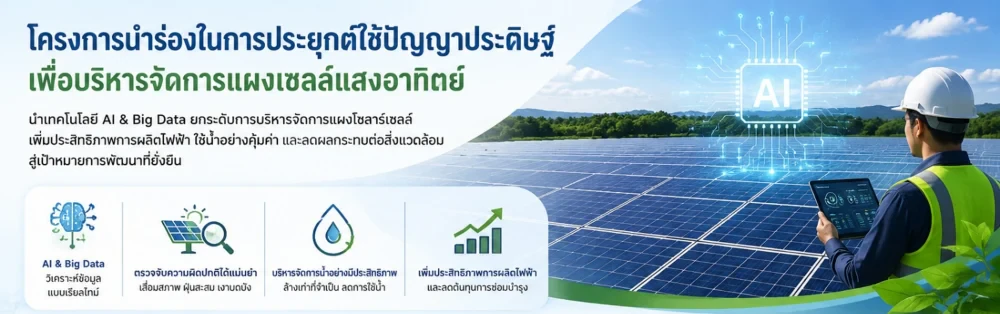
The Company therefore focuses on efficient water resource management through water risk assessments, continuous monitoring of water consumption data, and the application of technologies such as AI and Big Data to optimize solar panel cleaning schedules and reduce unnecessary water consumption. These efforts support sustainable business operations while minimizing long-term impacts on communities and the environment.
Targets and Performance

Limit water consumption in office buildings to
Targets
Performance

Limit tap water and groundwater consumption per unit of electricity generation to
Targets
Performance

Conduct a water stress assessment for power plant project areas
Targets
Performance

Water withdrawal in water-scarce areas in excess of the limits prescribed by applicable laws or regulations
Targets
Performance

Reduce net water consumption by
Targets
Performance

water-related incidents with significant impacts on business operations, communities, or the environment
Targets
Performance

The volume of wastewater from operations discharged into external water bodies was
Performance

Strategy and Management Approach
During the site selection process for projects with a capacity exceeding 1,000 kVA, the Company requires project sites to be located outside agricultural irrigation areas, not obstruct waterways during the flood season, and not encroach upon public waterways, rivers, or canals.
During site preparation for construction, the Company places importance on selecting appropriate water sources, with primary consideration given to the water needs of local communities. Where groundwater use is necessary, the Company complies with the Groundwater Act B.E. 2520 (1977) by obtaining the legally required permits. The Company’s projects in Thailand are currently in the operational phase and apply sustainable water management principles to maintain a balance between business operations and water resource conservation while minimizing impacts on surrounding communities and the environment.
Water Risk Management
The Company has established a water risk management approach covering the entire operational value chain. Water resource considerations are integrated into the Company’s Enterprise Risk Management (ERM) process and Sustainable Development Goals (SDGs) to assess, monitor, and manage risks that may affect business operations, communities, and ecosystems over the short, medium, and long term.
The Company conducts annual water risk assessments covering both Physical Risks, such as water scarcity, flooding, and water quality risks, and Transition Risks arising from changes in regulations, government policies, water resource costs, technology, market conditions, and stakeholder expectations. The assessments also consider water-use requirements in each operational area and employ internationally recognized risk assessment tools, such as the Aqueduct Water Risk Atlas, together with climate data from the Climate Change Knowledge Portal.
The results of the water risk assessments are used to develop water management plans for each project, plan water use, establish water reduction measures, and prepare emergency response plans. These measures enhance water-use efficiency, reduce the risk of business interruption, and minimize impacts on surrounding communities and the environment.
For areas with high or moderate water risks, the Company establishes site-specific measures, such as improving water storage systems, reusing water, continuously monitoring water quality, adjusting solar panel cleaning schedules according to weather conditions and panel soiling levels, and preparing flood and drought prevention and response plans. These measures strengthen the Company’s preparedness for business continuity.
In addition, the Company continuously monitors water-related indicators, such as water consumption, water consumption per unit of electricity generation, the volume of water reused, and the number of water-related incidents affecting operations. The results are used to evaluate the effectiveness of water management measures and regularly review and improve operational plans.
Reducing Water Consumption
The Group manages water resources within the organization in accordance with the 3Rs principles: reducing water consumption (Reduce), reusing water (Reuse), and recycling treated wastewater (Recycle).
Reducing water Consumption by 3Rs

Reduce

Reuse
Recycle
The Company is committed to efficient water management. It uses groundwater and procures clean raw water from local suppliers to support activities within its projects, such as solar panel cleaning and general consumption. Wastewater generated from project operations is divided into two main categories:
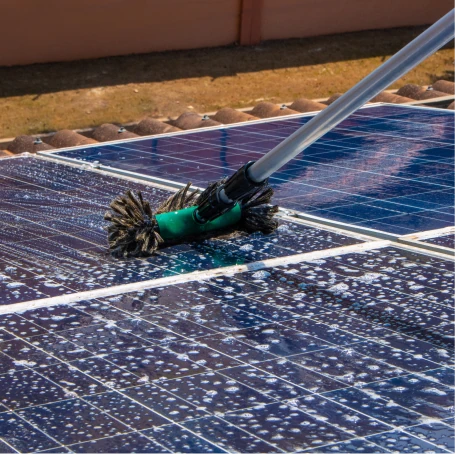
1. Wastewater from solar panel cleaning

2. Wastewater from restroom use
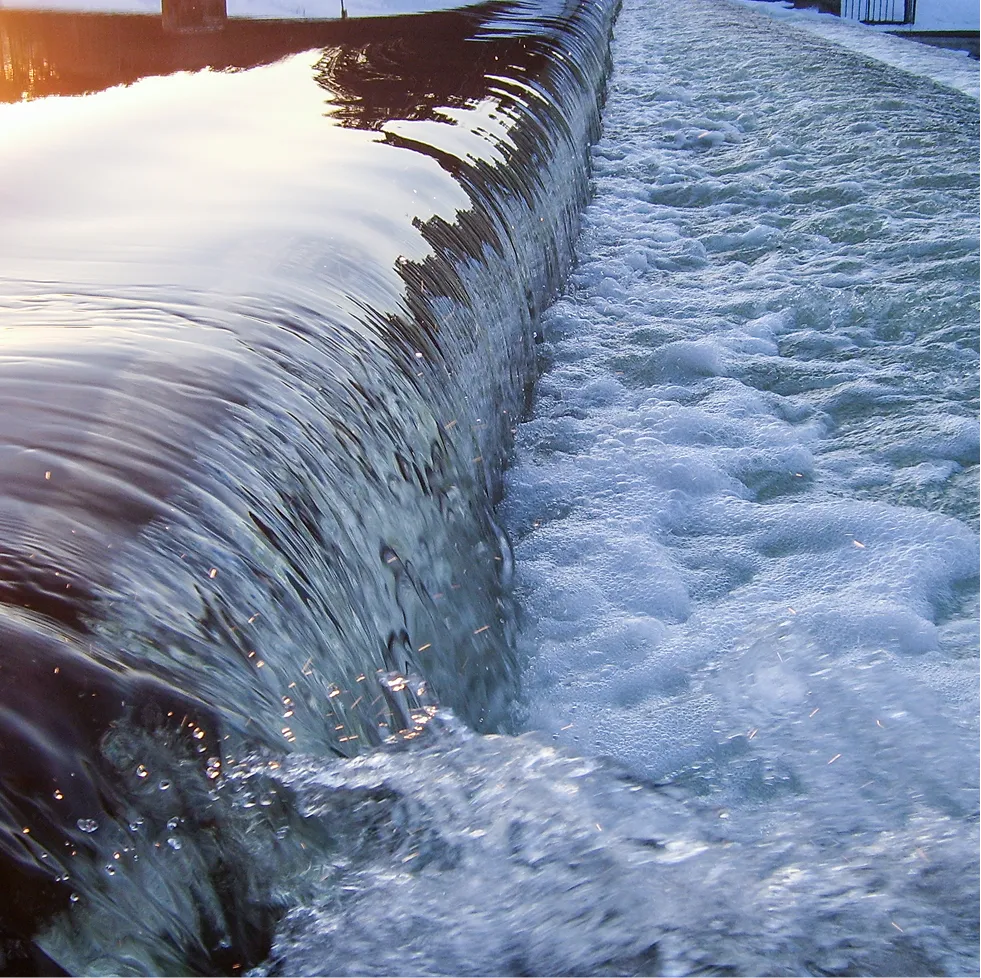
Water Reserves for Solar Panel Cleaning and Water Storage Systems
- Assess the adequacy of water available for cleaning solar panels without affecting communities or surrounding areas.
- Provide water storage tanks of adequate capacity and maintain storage pond levels within the prescribed maximum limits.
- Inspect water quality before use to ensure compliance with applicable standards.
Systematic Flood Prevention
- Study and assess flood risks in project areas.
- Develop emergency response plans and preventive measures, such as flood protection embankments in at-risk areas and water-level monitoring points around operational areas.
- Continuously monitor and assess water conditions.
Drainage System Inspection
- Regularly maintain and inspect drainage systems and related equipment to ensure operational readiness.
- Train employees and contractors to work safely.
- Minimize the environmental impacts of drainage systems.
Water Reuse
- Use water resources efficiently by checking water quality against applicable standards and reusing water for activities such as watering plants.
- Design efficient water circulation systems to reduce water loss and long-term environmental impacts.
Water Stress Assessment in Watersheds Near Operational Areas
- Assess water stress levels in watersheds near project areas.
The Company continuously monitors and records water consumption data throughout the year to assess trends and adjust its plans accordingly. During the past year, the Company began studying ways to reduce water consumption through a program that calculates when solar panel cleaning is necessary. An AI-powered data collection and analysis system is currently being piloted at the Group’s power generation projects. In addition, the Company has established water reduction measures covering both office buildings and power generation project areas, as follows:
For office buildings, the Company conducts internal campaigns to inform employees of the previous year’s water consumption compared with the annual target and monitors performance to raise awareness and promote employee engagement in achieving sustainable water reduction targets.
For power generation project areas, the Company ensures that effluent quality complies with legal standards and reuses the water for various activities to reduce raw water consumption within the projects. The Company also implements long-term reforestation projects at its solar power project sites and considers using project effluent to water seedlings. This reduces reliance on public water sources and minimizes impacts on water use by local communities, reflecting the Company’s commitment to water conservation and ecosystem sustainability.


Key Stakeholders

Employees
- Raised awareness of water management, climate change, and environmental conservation through corporate activities and the monitoring of water consumption performance, thereby promoting employee engagement in achieving the Company’s sustainability goals.
- Promoted knowledge and the application of technologies and innovations, such as AI and Big Data, to enhance operational efficiency and effectively reduce water consumption.
- Promoted an organizational culture centered on environmental responsibility, safety, ethics, and responsible business conduct toward society and stakeholders.

Communities
- Assessed risks and developed plans to prevent and mitigate impacts on communities arising from water-related risks, such as flooding, wastewater leakage from treatment systems, and the impacts of climate change.
- Conducted water stress assessments in power plant project areas to monitor local water conditions, avoid unnecessary water consumption, and support efficient and sustainable water management.
- Implemented water and wastewater management measures, including water reuse within project areas, to minimize impacts on public water sources and surrounding communities.
- Strictly complied with environmental laws and requirements while continuously monitoring and managing water-related risks.
- Supported improvements in quality of life, maintained positive relationships with communities, and regularly sought feedback from stakeholders in project areas.