

Business Code of Conduct

Supporting the SDGs

The Company is committed to conducting business transparently and adhering to its Business Code of Conduct to build trust among all relevant parties.
Amidst a highly competitive business environment, conducting business with integrity and upholding ethical standards provide an essential foundation for strengthening relationships with stakeholders and serve as a key mechanism for advancing the organization toward greater long-term sustainability.

Challenges and Opportunities
The Company recognizes that today’s business environment presents increasingly complex ethical and governance challenges arising from the expansion of investments across multiple countries, operations involving diverse suppliers and business partners, and stakeholder expectations regarding business conduct that emphasizes integrity, clarity, transparency, social responsibility, and ethical practices throughout the value chain.
In addition, changes in laws, international standards, and increasingly stringent ESG requirements, such as those concerning anti-corruption, personal data protection, human rights, and supplier governance, may affect the Company’s credibility, reputation, and competitiveness if it does not have sufficiently effective governance and management systems in place.
At the same time, the Company views conducting business in accordance with its Business Code of Conduct and good corporate governance principles as a significant opportunity to build confidence among all groups of stakeholders and elevate its operating standards to an international level. The Company is committed to conducting business in accordance with its Business Code of Conduct, strengthening its governance and risk management systems, communicating and fostering an ethical corporate culture, and encouraging suppliers and business partners to operate in accordance with ESG principles and the Supplier Code of Conduct. These efforts support transparent and sustainable growth over the long term.
Targets and Performance

Number of complaints/disputes concerning ethics and legal compliance:
Targets
Performance

Number of complaints/disputes concerning human resources
Targets
Performance

Number of complaints/disputes concerning corruption and bribery
Targets
Performance

Number of cases involving retaliation against or violations of the rights of whistleblowers
Targets
Performance

Communication of corporate governance and anti-corruption policies to executives and employees
Targets
Performance

A total of 41 executives and employees participated in the CG Day 2025 activity under the theme “Change Your Mind, Change Your Life,” representing
Performance

Reporting of performance, complaints, and related risk issues to the Board of Directors
Targets
Performance

Strategies and Management Approach
Business Code of Conduct
The Company is committed to conducting business with ethics, transparency, and good corporate governance. It places importance on fostering a corporate culture based on the Business Code of Conduct among directors, executives, employees, and suppliers throughout the value chain to promote transparent, responsible, and accountable business conduct. The Company has established practices covering three areas:

The Business Code of Conduct

The Code of Conduct for Directors, Executives, and Employees

The Code of Conduct for Procurement and Supplier Management
Anti-Corruption, Anti-Bribery, and Fair Competition
The Company has established an Anti-Corruption and Anti-Bribery Policy covering the Board of Directors, executives, and employees at all levels, as well as subsidiaries, companies in which the Company has jointly invested, or other entities under the Company’s control, together with the Company’s agents and business partners. The Company regularly assesses and manages risks related to corruption, discrimination, and bribery. It also establishes appropriate internal control measures, audit processes, and oversight practices to prevent risks and reduce potential impacts on the organization.
The Company adheres to the principles of the United Nations Global Compact and has developed its anti-corruption management system in alignment with the certification criteria of the Private Sector Collective Action Against Corruption (CAC). The Company received its third CAC membership renewal certification on 31 December 2023. This covers the establishment of policies and commitments by senior management; corruption risk assessments; internal control measures; the management of suppliers and business agents; communication and training for employees at all levels, including directors and executives; the provision of whistleblowing channels; and the regular monitoring, review, and evaluation of the effectiveness of the measures. These efforts enhance corporate governance standards and promote a transparent, accountable, and corruption-free corporate culture at every level of the organization.
The Company has also established an anti-corruption governance structure, with clearly defined roles, duties, and responsibilities at every level of the organization. This structure supports robust internal controls, monitors legal compliance, and mitigates risks arising from actions that could cause damage to the Company.
In addition, the Company is committed to fair competition and does not engage in any conduct that violates trade competition laws, including price-fixing, market allocation, or any action that could result in an improper competitive advantage, thereby building sustainable confidence among all groups of stakeholders.
Organizational Structure for Anti-Fraud and Anti-Corruption Oversight
Board of Directors
Executive Committee and Enterprise Risk Management Committee
Corporate Governance and Sustainable Development Committee
Audit Committee
Corporate Strategy Department
Company Secretary and Chief Executive Office
Internal Audit Office
To demonstrate its full commitment to combating corruption, the Company has established the following practices:
Directors, executives, and employees at all levels
Operating processes to prevent potential corruption
2.1 Political Neutrality and Political Contributions
- The Company is a politically neutral business organization that complies with applicable laws and supports democratic governance under a constitutional monarchy. The Company does not make political contributions to any political party or political group, either directly or indirectly.
- Directors, executives, and employees have political rights and freedoms under the law. In exercising these rights and freedoms, they shall not take any action that could compromise the Company’s political neutrality or adversely affect its reputation and credibility.
- Directors, executives, and employees shall not use the Company’s activities for political purposes under any circumstances.
The Company has established practices on political contributions as part of its Anti-Corruption Policy and Business Code of Conduct. These practices apply to directors, executives, and employees at all levels and are intended to prevent risks related to conflicts of interest, undue influence, and conduct that may violate laws or good corporate governance principles.
2.2 Charitable Donations and Sponsorships
The Company supports community and social development to improve quality of life and strengthen communities through its business operations and charitable donations for public benefit activities and social projects. These efforts aim to create sustainable positive impacts for stakeholders and communities in the Company’s operating areas.
The Company requires all donations and sponsorships to be made transparently, accountably, and in accordance with its Anti-Corruption Policy. Appropriate procedures are established for approval, verification of the purpose of the support, retention of supporting documents, and monitoring of expenditures to prevent donations or sponsorships from being used as a means of bribery, providing improper benefits, or engaging in conduct that may violate laws or the Company’s good corporate governance principles.
2.3 Hospitality, Gifts, and Other Expenses
The Company has established practices governing the giving or receiving of gifts, hospitality, facilitation payments, and other expenses to prevent risks related to corruption, conflicts of interest, and the improper exercise of influence in business operations.
The Company’s directors, executives, and employees shall not accept gifts or any other items, either directly or indirectly, from parties connected with the Company’s business and shall avoid accepting hospitality or expenses beyond normal and customary levels. Where acceptance cannot be avoided, employees must immediately report the matter through their respective lines of command and strictly follow the practices established by the Company.
The Company requires any hospitality provided or expenses covered for government agencies, suppliers, or other parties connected with its business to be appropriate, transparent, verifiable, and compliant with applicable laws, the Anti-Corruption Policy, and relevant customs and practices in each country in which the Company operates.
2.4 Anti-Money Laundering
The Company neither engages in nor supports any activities involving money laundering, the receipt or conversion of assets, the concealment of the source of unlawfully acquired assets, or transactions that may be connected with unlawful activities. This is to prevent the Company from being used as a channel for money laundering.
The Company therefore places importance on conducting due diligence on suppliers and contracting parties and maintaining careful and accurate records of financial transactions and assets. It also strictly complies with applicable laws, rules, and regulations concerning money laundering and international sanctions.
2.5 Revolving Door
The Company does not employ government personnel or public officials in any manner that may create a conflict of interest. Former government personnel are selected in accordance with clear and fair criteria under the Company’s regulations to prevent any position, authority, or influence arising from their previous public service from being used in exchange for or to secure a business advantage. The Company also places importance on transparent and verifiable disclosure to maintain ethical standards and good corporate governance principles in its business operations.
Renewal of Membership Certification under Thailand’s Private Sector Collective Action Coalition Against Corruption (CAC)
The Company follows CAC guidelines and assessment criteria, which cover the establishment of anti-corruption policies and measures, risk assessments, internal governance, employee communication and training, whistleblowing and whistleblower protection, and the regular monitoring and review of the effectiveness of its operating processes, to strengthen a corporate culture that upholds integrity and accountability.
In addition, the Company has extended its anti-corruption efforts to key suppliers by communicating guidelines for becoming CAC network partners to raise awareness, jointly elevate standards for transparent business conduct, and promote corruption-free business operations at every level.
Whistleblowing
The Company provides whistleblowing channels through which both internal and external stakeholders, including employees, suppliers, contractors, customers, communities, investors, and other stakeholders, can report inappropriate conduct, such as violations of laws, corruption, or breaches of the Business Code of Conduct within the organization that may affect the Company or other parties. The Company strictly safeguards both the confidentiality of information and the rights of whistleblowers to foster a transparent and accountable corporate culture.

Reportable Matters

Violations of laws

Breaches of the Business Code of Conduct

Operational errors

Conduct that may affect the Company’s reputation
Whistleblower Protection
The Company places importance on protecting whistleblowers by establishing non-retaliation measures for whistleblowers, informants, and persons who cooperate in fact-finding investigations. Whistleblowers who act in good faith shall not be demoted, penalized, dismissed, threatened, or subjected to any action that may adversely affect them.
Process
Upon receiving a whistleblowing report, the Company promptly and fairly investigates the facts while maintaining the confidentiality of the whistleblower throughout the process. The Company thoroughly and carefully analyzes and assesses the information received. If the report is substantiated, the Company takes appropriate corrective and preventive action and may impose disciplinary measures or initiate legal proceedings where necessary. Where a matter is significant or involves senior executives, the Company reports the findings to the Audit Committee and/or the Corporate Governance Committee to ensure fair oversight of the process and strengthen a corporate culture that upholds integrity, transparency, and accountability.
In addition, the Company uses the investigation findings to establish corrective and preventive measures and improve its operating processes to prevent recurrence and continuously strengthen its internal governance system.
Complaint Reporting Process
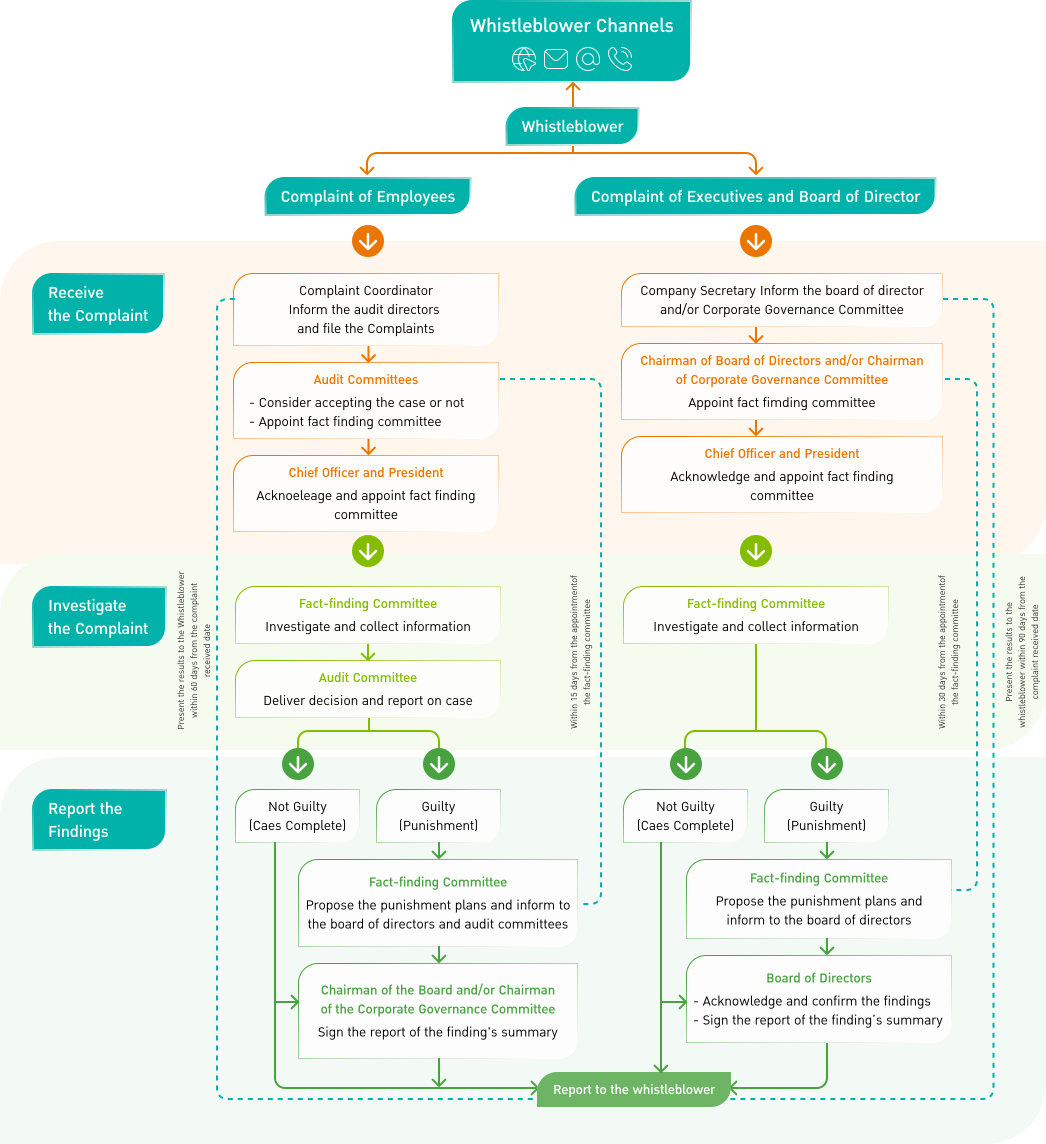
หมายเหตุ : กรณีมีความจำเป็นที่ไม่สามารถจะดำเนินการให้แล้วเสร็จภายในกำหนดระยะเวลาให้ผู้ประสานงานข้อร้องเรียน นำเสนอผู้มีอำนาจแต่งตั้งคณะทำงานตรวจสอบข้อเท็จจริง (ตามแต่กรณี) เพื่อพิจารณาอนุมัติขยายระยะเวลาการตรวจสอบได้ครั้งละไม่เกินจำนวนวันของแต่ละกรณี
Whistleblowing or Complaint Channels
The Company provides whistleblowing or complaint channels through which persons both within and outside the organization can report suspected violations of laws, corruption, breaches of the Business Code of Conduct, or other inappropriate conduct. Reports or complaints may be submitted through the following channels:
Company Website:
Sealed Letter
- Audit Committee and Head of the Internal Audit Office (For reports concerning employees)
E-mail: ico@bcpggroup.com
- Chairman of the Board of Directors, Chair of the Corporate Governance Committee, and Company Secretary (For whistleblowing reports or complaints concerning the following persons or groups: 1. Chief Executive Officer, 2. Directors and/or, 3. Subcommittees)
E-mail: cg@bcpggroup.com
Telephone:
Trade Competition Policy
The Company conducts its business in accordance with the principles of free, fair, and transparent trade competition and complies with all applicable laws and requirements in every country in which it operates. The Company neither engages in nor participates in any conduct that may result in monopolization or restrict trade competition, such as price-fixing with competitors, market allocation, the improper exchange of competitively sensitive information, or the provision of improper benefits to competitors.
In addition, the Company encourages its directors, executives, and employees to comply strictly with trade competition laws to build confidence among all groups of stakeholders.
Conflict of Interest Policy
The Company has established a Conflict-of-Interest Policy that prioritizes the best interests of the Company and its shareholders. Any action or activity that may affect or pose a risk to the overall interests of the Company should be avoided to prevent conflicts or overlapping interests. The Company has established the following practices:

1. Avoidance of Conflicts of Interest

2. Compliance with the Requirements of the Stock Exchange of Thailand
Where the Company engages in a connected transaction under the requirements of the Stock Exchange of Thailand (SET) or the Securities and Exchange Commission (SEC), it must comply strictly with the applicable requirements to maintain transparency in its business operations. The Company must also comply with its policy governing the operations of companies in which it has jointly invested.
- Where a transaction falls within management’s approval authority, the relevant department is responsible for considering the transaction in accordance with the approval procedures prescribed in the Company’s regulations. Following management approval, the relevant department must submit the transaction to the Audit Committee for a review of its reasonableness.
- Where a transaction falls within the approval authority of the Board of Directors or shareholders, the relevant department must submit details of the transaction, including its necessity and reasonableness, to the Audit Committee for endorsement before submitting it to the Board of Directors or the shareholders’ meeting for consideration and approval, as applicable.

3. Disclosure in Accordance with the Prescribed Criteria

4. Establishment of an Audit Plan
Privacy Policy and Personal Data Protection
The Company prioritizes the protection of personal data and the information security of all stakeholder groups by collecting, using, disclosing, and retaining personal data for clear and transparent purposes in compliance with applicable laws and requirements.
The Company has established appropriate information security measures covering management, operational processes, and information technology systems to prevent unauthorized access, use, disclosure, or alteration of information, including assigning access rights based on the level of access necessary for the performance of duties.
Further information on the Privacy Policy is available on the Company’s website and in the relevant documents.
Internal Communication and Promotion of the Business Code of Conduct
The Company prioritizes fostering a corporate culture of ethical conduct and adherence to good corporate governance principles by requiring the Board of Directors, executives, and employees at all levels to acknowledge and strictly comply with the Corporate Governance Policy, the Business Code of Conduct, and relevant guidelines.
The Company continuously communicates its policies and guidelines on the Business Code of Conduct, including guidelines for managing conflicts of interest, to its personnel. New employees and executives are informed of and briefed on the relevant policies from their first day of work to build understanding and promote practices aligned with the Company’s ethical principles.
In addition, the Company reviews and communicates relevant information at least once a year or whenever significant changes occur to ensure that personnel at all levels are fully informed of the latest applicable requirements, guidelines, and laws, including those consistent with the criteria of the Securities and Exchange Commission (SEC), the Stock Exchange of Thailand (SET), and relevant corporate governance standards.
Support for Trade Associations
The Company recognizes the importance of participating in and supporting trade associations and business organizations that promote business practices based on good governance, transparency, and sustainable development principles at both national and international levels. Such participation facilitates the exchange of knowledge and best practices, as well as the development of cooperation with various organizations to enhance the operating standards of the Company and the business sector as a whole.
The Company has established guidelines for managing and assessing its membership in trade associations to ensure that the objectives, policies, and activities of the associations in which it participates are aligned with the Company’s values, corporate strategy, and sustainability goals, including the principles of good corporate governance, ethical business conduct, and the transition to a low-carbon economy under the Paris Agreement.
In addition, the Company prioritizes the governance of its Public Policy Engagement and the transparent conduct of policy advocacy activities through trade associations. The Company does not support any activities or positions of trade associations that conflict with laws, ethical principles, anti-corruption practices, human rights, or the Company’s environmental and climate change goals.
Guidelines for the Assessment and Oversight of Trade Associations
The Company continuously assesses and reviews its membership in trade associations, covering the following key areas:

Assessment Prior to Membership

Performance Monitoring and Review

Reporting and Decision-Making
The Company allocates budgets, membership fees, and financial support in accordance with its regulations and in a verifiable manner. It also encourages Company representatives serving on the boards or working groups of associations to perform their duties ethically and transparently and to avoid conflicts of interest.
The Company does not use trade associations as channels for making political contributions or undertaking any action that may conflict with trade competition laws, good governance principles, or the Company’s sustainability goals.
| Trade Association | BCPG Contribution | BCPG Spending |
|---|---|---|
 United Nations Global Compact (UNGC) United Nations Global Compact (UNGC) |
|
87,500 Baht |
 The Federation of Thai Industries (FTI) The Federation of Thai Industries (FTI) |
|
50,000 Baht |
 RE100 RE100 |
|
2,000 Baht |
 Carbon Market Club Carbon Market Club |
|
850,000 Baht |
Financial Support and Initiatives on Material Issues
| Issue Supported | Details of Support | Amount |
|---|---|---|
| Climate Change |
The Company supports initiatives and cooperation with trade associations and business networks involved in climate change to promote greenhouse gas emission reductions, carbon market development, and the transition to a low-carbon economy. Its support focuses on projects that develop knowledge of organizational carbon footprints, greenhouse gas emission calculation and management, the promotion of renewable energy use, and mechanisms supporting Net Zero. The Company participates through RE100, the Carbon Market Club, and the Federation of Thai Industries to jointly advance approaches, policies, and clean energy cooperation aligned with the goals of the Paris Agreement and the country’s sustainable energy transition. | 902,000 บาท |
 Human Rights Human Rights |
The Company supports human rights initiatives through cooperation with organizations and business networks that promote responsible business conduct in accordance with international standards. Its support focuses on raising awareness of human rights, assessing human rights risks and impacts, and promoting approaches aligned with international principles, such as the United Nations Global Compact (UNGC) and the Sustainable Development Goals (SDGs), to ensure that the Company’s business operations respect human rights throughout the value chain and mitigate long-term social and reputational risks. | 87,500 Baht |

Charitable Contributions
The Company makes charitable donations and supports public-benefit activities aimed at creating shared value for society, communities, and the environment in areas including health, sports, environmental conservation, and the promotion of traditions and culture, to create positive and sustainable impacts on society.
The Company has established a process for considering and selecting donation projects based on their alignment with its sustainability policies, corporate objectives, and benefits to stakeholders to prevent risks related to corruption or the misuse of donations.
In 2025, the Company provided a total of THB 1,306,430 in donations for charitable and public-benefit activities, with the aim of contributing to balanced and sustainable social, economic, and environmental development and delivering tangible benefits to communities and society.


Key Stakeholders

Investors/Shareholders
- Communicated corporate ethics, including case studies, ethical risks, and transparent corporate governance practices, to build confidence among investors and shareholders.
- Disclosed material information transparently and promptly, including operating results, financial statements, and major investment projects.
- Paid interim dividends in accordance with a clearly defined policy.
- Provided shareholders with opportunities to propose meeting agenda items and nominate qualified candidates for appointment as directors.
- Disclosed changes in directors or senior executives appropriately and promptly.

Employees
- Promoted knowledge of corporate ethics compliance, anti-corruption, and human rights practices to foster a transparent and responsible corporate culture.
- Emphasized and upheld compliance with the laws and regulations of every country in which the Company operates, together with respect for human rights principles in accordance with international standards.
- Supported and encouraged employees to pursue continuous self-development and prepare for changes in the energy industry.
- Reviewed and communicated operating practices aligned with corporate ethics through ESG activities to instill a sense of responsibility toward communities, society, and the environment.

Suppliers
- Communicated and promoted knowledge of corporate ethics compliance, anti-corruption, and ethical business practices throughout the value chain to establish a common understanding of expectations and appropriate practices when working with stakeholders.
- Established a Supplier Code of Conduct and regularly assessed suppliers’ ESG risks.
- Encouraged suppliers to conduct business with due regard for human rights, safety, occupational health, and environmental management.
- Established risk management processes, internal audits, and whistleblowing channels to prevent corruption and misconduct.

Business Partners
- Communicated corporate ethics, good corporate governance principles, and transparent business practices to suppliers and business partners to establish a common understanding and align the ethical practices of the Company and its suppliers, thereby strengthening confidence and trust in conducting business activities together transparently and sustainably.
- Prepared for changes in the energy industry, government regulations, and the transition toward a low-carbon economy.
- Encouraged and supported suppliers in adhering to business ethics principles, with an emphasis on responsible and transparent operations that take all groups of stakeholders into consideration.

Communities
- Communicated with and built confidence among communities through activities demonstrating social and environmental responsibility and transparent business conduct.
- Promoted and supported community activities related to natural resource and environmental conservation and sustainable energy use, which play an important role in improving the quality of life and well-being of communities and society as a whole.
- Promoted community participation, listened to community opinions, and respected the human rights of communities in the Company’s operating areas.