
Community and Social Development

Supporting the SDGs


Opportunities and Challenges
Communities surrounding the Company’s operations are key stakeholders in the organization’s success. As a developer and operator of renewable energy businesses, the Company’s activities may have direct and indirect impacts on the livelihoods, economies, societies, and environments of communities in each area. The Company’s key challenge is therefore to build understanding, trust, and acceptance among communities through continuous stakeholder engagement throughout project implementation, including listening to community opinions before a project begins, assessing community needs and priority issues, monitoring operational impacts, receiving feedback and complaints, and respecting human rights. The Company uses the resulting input to continuously improve its operations in line with community expectations and to prevent and reduce risks that may affect its operations over the long term.
At the same time, the Company views community and social development as an important opportunity to create shared value and enhance the quality of life of communities alongside business growth. The Company therefore develops projects that respond to the specific needs and context of each area, such as promoting local employment and economies, developing skills and educational opportunities, supporting the conservation of natural resources and the environment, and developing essential infrastructure. Gaining community trust and acceptance not only reduces social risks and supports business continuity but also strengthens sustainable growth and creates shared value for all stakeholder groups.
Targets and Performance

Employment of more than
Targets
Performance

beneficiaries of community projects
Targets
Performance

Employee participation rate in social projects of at least
Targets
Performance

Community complaints or disputes arising from the Group’s business activities
Targets
Performance

Community feedback and expectations assessed for
Performance

Strategy and Management Approach
The Company believes that sustainable business growth must go hand in hand with creating shared value for stakeholders, particularly communities in its operational areas. This approach aligns with the Company’s material sustainability topic of Engagement in Community and Social Development
and aims to build understanding, trust, and acceptance among communities through continuous, transparent, and comprehensive stakeholder engagement throughout the project lifecycle.
The Company’s community management approach begins with Community Needs Assessment by gathering feedback, holding meetings with communities, government agencies, and local leaders, and collecting suggestions and complaints through various channels. The information is analyzed to identify key issues and establish plans, projects, and activities that respond to the specific context and needs of each area.
The Company prepares a sustainable development activity plan covering the operations of the Company and its group companies under the concept of “Breath of the World,” which aims to restore natural resources while enhancing people’s quality of life through innovation and renewable energy. The plan comprises three key approaches:

Breath of the Wilds

Breath of the Waters

Breath of the Souls
In addition, the Company has established a process for managing impacts on stakeholders, including communities surrounding its operational areas, under the Code of Practice (CoP). The Company conducts an Environmental Impact Assessment (EIA) and an Environmental Site Assessment (ESA) before commencing a project and provides multiple communication and grievance channels, such as suggestion boxes, community relations officers, online channels, and meetings with communities, enabling stakeholders to conveniently express their opinions or raise concerns.
The Company also enables communities to participate through project visits, meetings to gather feedback, satisfaction surveys, and meetings with community committees to monitor performance and jointly plan resource management in the area. The Company has clearly established the procedures, timeframes, and responsible persons for grievance management and reports progress on the implementation of community development projects.
Grievance Handling Plan
The Company provides an open, transparent, and accessible grievance mechanism for all stakeholder groups, particularly communities in its operational areas, enabling them to conveniently, promptly, and fairly report grievances, concerns, or suggestions related to impacts arising from business operations through multiple channels.
The Company has established a systematic grievance handling process that specifies grievance channels, procedures, and timeframes for reviewing and resolving issues, as well as the persons responsible at each stage. A detailed process flowchart has also been prepared to enable complainants to clearly understand the process and transparently track the status of their grievances.
Upon receiving a grievance, the Company investigates the facts, assesses the impacts, and determines corrective measures in collaboration with the relevant units. The Company also continuously communicates the actions taken and progress to the complainant. If the grievance cannot be resolved within the specified timeframe, the Company provides the complainant with progress updates every 7 days until the resolution is completed.
The Company places importance on maintaining complainant confidentiality, protecting complainants from retaliation, and treating all grievances fairly and equally. In addition, the Company continuously collects, analyzes, and monitors grievance data and uses the analysis of causes, feedback, and lessons learned to improve its operating processes, preventive measures, and community engagement activities. These improvements reduce the likelihood of recurrence and strengthen stakeholder trust over the long term.
Appointment of Community Committees
The Company promotes community participation in project implementation by establishing Community Committees as a mechanism for communication, gathering feedback, and monitoring community and environmental performance. The committees provide a forum for exchanging information, suggestions, and concerns between the Company and stakeholders in each area, as well as jointly considering community development approaches and the management of potential impacts arising from project implementation.
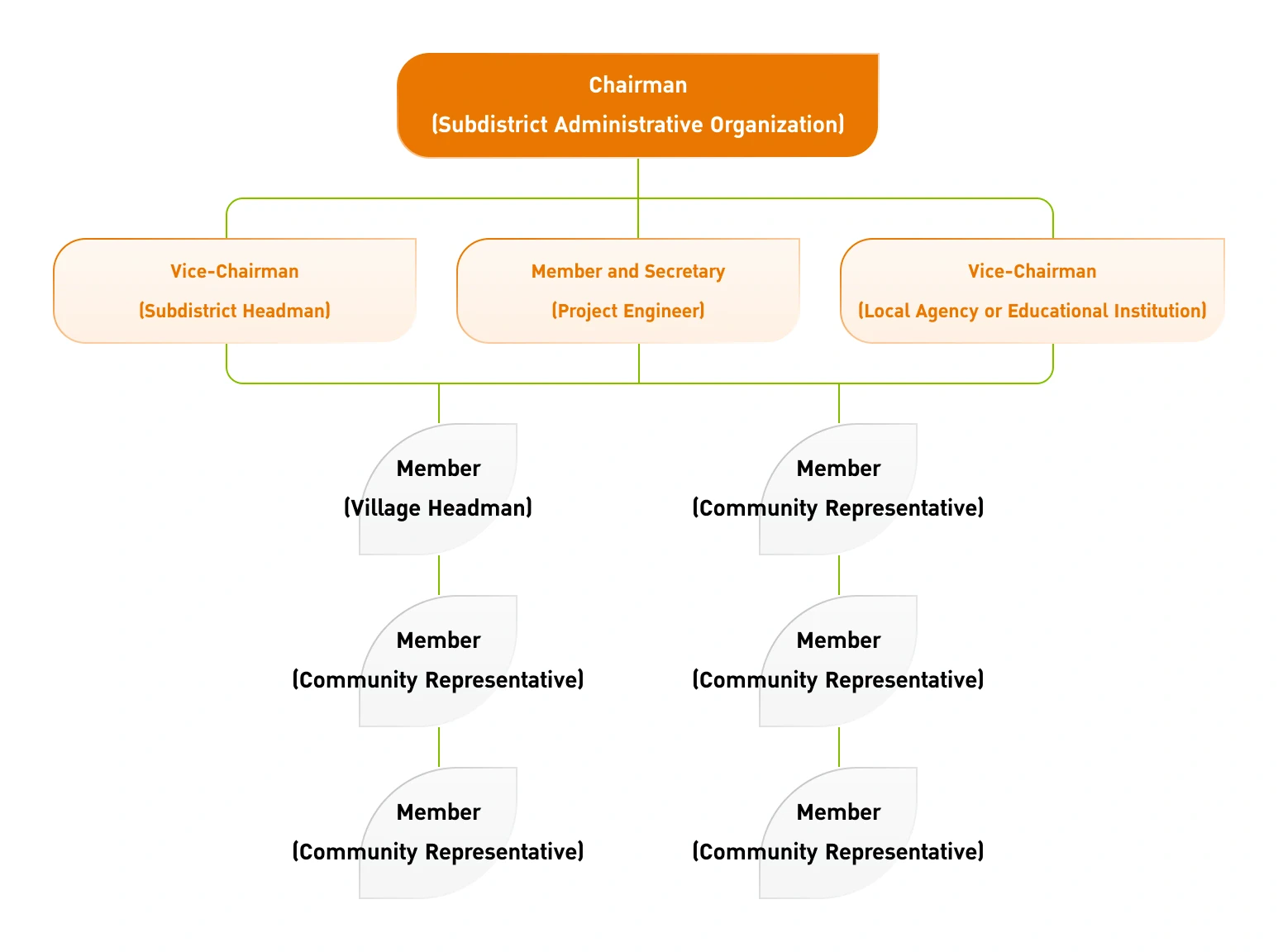
The Community Committees comprise representatives from various sectors, including community representatives, government agencies or local administrative organizations, local educational institutions or academics, and the Company, with community representatives required to account for more than half of all committee members to ensure that deliberations and decisions reflect community perspectives and needs.
In addition, the appointment of Community Committees provides an important channel for receiving grievances, suggestions, and concerns from communities, enabling the Company to investigate, provide clarification, and determine solutions jointly with stakeholders in a timely, transparent, and fair manner.
Community Needs
Before developing community plans, the Company conducts a Community Needs Assessment jointly with stakeholders in each area, using information from meetings to gather feedback, community needs surveys, discussions with community leaders and government agencies, and grievances received. The information is used to prioritize key issues and design projects that respond to the context of each area.
The assessment identified the issues prioritized by communities, including local job creation, youth development, natural resource conservation, income generation, and safety in project implementation. The Company uses these issues to develop its annual action plans.
The Company reviews performance to improve the activity formats, budgets, and implementation approaches of projects in the following year, with particular attention to vulnerable groups such as children, youth, older persons, persons with disabilities, and low-income groups, ensuring that all groups have equal access to project benefits.


Key Stakeholders

Employees
- Engaged employees in community and social development through the Corporate Volunteer Program.
- Developed employee capabilities in social responsibility, human rights, and stakeholder engagement to enable them to work appropriately with communities.
- Enabled employees to propose ideas and implement social activities aligned with community needs and the Company’s sustainability strategy.
- Communicated community development performance and gathered employee feedback for continuous improvement.

Communities
- Strictly complied with environmental, occupational health, and safety laws and regulations relevant to business operations.
- Developed and invested in renewable energy projects and applied technologies to enhance electricity generation efficiency and reduce environmental impacts, while promoting community access to clean energy as appropriate to each area.
- Implemented measures to control and reduce environmental impacts, including water and wastewater management, waste management in accordance with applicable standards, greenhouse gas emission reduction, and assessment of impacts on ecosystems and biodiversity.
- Created employment and income opportunities for people in communities surrounding the Company’s operational areas to support business operations and local economies and improve the quality of life of communities.
- Supported community development projects and social activities that addressed the needs of each area, including education, the environment, vocational skills development, and natural resource conservation.
- Supported local cultural and traditional activities to strengthen relationships between the Company and communities.
- Continuously engaged with communities through meetings to gather community feedback, community opinion and satisfaction surveys, project visits, and grievance channels, using the feedback received to improve operations and build long-term trust.

Government Agencies and Regulatory Authorities
- Strictly complied with laws, regulations, and licensing conditions relevant to business operations and continuously monitored changes in applicable requirements.
- Coordinated with government agencies, local administrative organizations, and regulatory authorities to support economic, social, and environmental development in the Company’s operational areas.
- Disclosed accurate, transparent, and complete information and cooperated with inspections, monitoring, and performance reporting in accordance with the requirements of relevant authorities.
- Supported projects and activities aligned with government policies on clean energy, greenhouse gas emission reduction, natural resource conservation, and sustainable community development.