
Waste and Pollution Management

Supporting the SDGs
The Company recognizes the importance of systematic waste and pollution management in preventing and mitigating potential impacts on the environment, health, the quality of life of society and surrounding communities, and operational safety.
Although renewable power generation does not directly cause air pollution, the Company believes that effective waste and pollution management can control and prevent potential impacts throughout the supply chain. The Company adheres to international standards to ensure the effective management of waste and pollution without adversely affecting the environment or communities, while strengthening the Company’s long-term sustainability.

Opportunities and Challenges
Although the Company’s renewable energy operations generate relatively low levels of waste and air pollution, the Company recognizes the importance of waste management, pollution control, and efficient resource use in minimizing impacts on the environment, health, and the quality of life of surrounding communities.
The Company applies Circular Economy principles by reducing waste at source, reusing materials, and disposing of waste in strict accordance with international and environmental standards throughout every stage of operations, from project development and construction to operations and maintenance across the supply chain. These practices not only reduce costs and improve efficiency but also enhance the Company’s reputation as a socially and environmentally responsible business. Sustainable waste management and air pollution control also provide opportunities to strengthen stakeholder confidence and support the Company’s long-term sustainable development goals.
Targets and Performance

Reduce general waste generated in office buildings by
Targets
Performance

Reduce non-hazardous general waste
Targets

Maintain zero use of foam products in office buildings (Zero Foam)
Targets
Performance

Achieve Zero Waste to Landfill
Targets
Performance

Ensure that all air quality parameters
Targets
Performance

Achieve ISO 14001 Environmental Management System certification
Targets
Performance

spill incidents with significant impacts on business operations, communities, or the environment.
Targets
Performance

Strategy and Management Approach
Waste Management
The Company places strong emphasis on managing waste generated by its business operations by strictly complying with the Code of Practice (CoP) for solar photovoltaic power generation facilities, the ISO 14001 Environmental Management System standard, and the Enhancement and Conservation of National Environmental Quality Act B.E. 2535 (1992) to ensure that the Group’s operations do not adversely affect the environment.

In alignment with its Green environmental sustainability strategy and policy, the Company applies the 5Rs principles to guide sustainable waste management: Reduce, Reuse, Recycle, Repair, and Reject. These principles enhance resource-use efficiency, reduce the amount of waste requiring disposal and the consumption of new resources, and minimize environmental impacts.
Waste is managed systematically throughout the process, from sorting, collection, storage, and transportation to recovery, recycling, and disposal in accordance with sound technical practices and legal requirements. Waste data are also recorded, monitored, and reported throughout the year, while appropriate management methods are applied to minimize environmental impacts.
The Company aims to achieve Zero Waste to Landfill through efficient resource use, the promotion of recycling, waste recovery, and waste reduction at source to reduce the risk of resource shortages and lower waste disposal costs, with the target of reducing the amount of waste from power generation processes sent to landfill to zero.
Waste from Office Buildings
The Company manages general or non-hazardous waste from office buildings, such as packaging, food waste, paper, and plastic with the Occupational Safety, Health and Working Environment Committee overseeing target setting and monitoring waste reduction in office buildings.
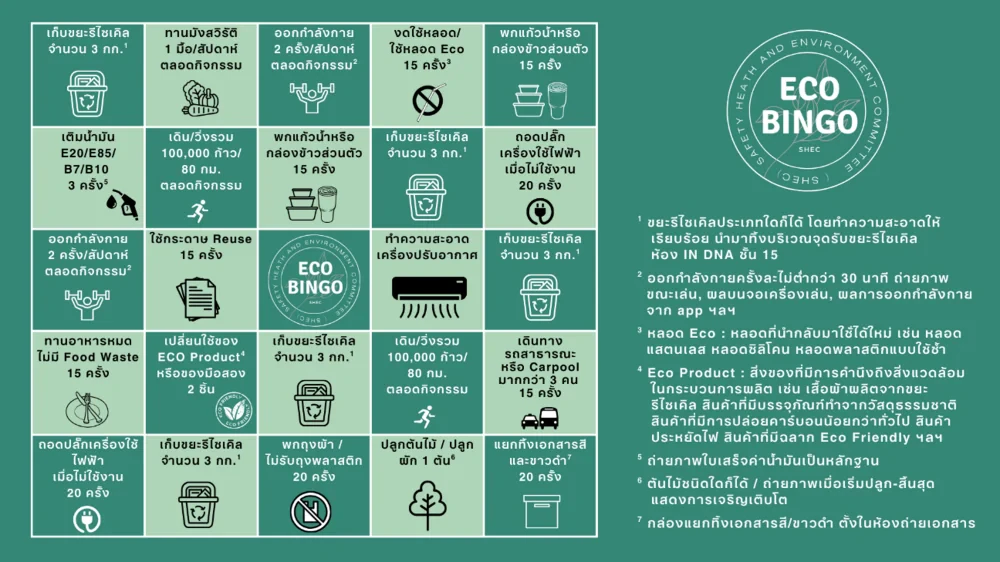
In addition, the Company provides a waste separation system with designated bins for organic, recyclable, and general waste, while conducting campaigns to promote waste reduction and efficient resource use. These include reducing single-use plastics, encouraging the use of personal containers, eliminating foam containers (Zero Foam), and organizing 5S activities to raise awareness and promote employee engagement in reducing environmental impacts.
Hazardous Waste Management
The Company systematically manages hazardous waste generated by its operations, covering sorting, storage, transportation, disposal, and final destination tracking. It works with legally authorized waste disposal contractors to ensure that hazardous waste is managed in accordance with sound technical practices without adversely affecting the environment or communities.
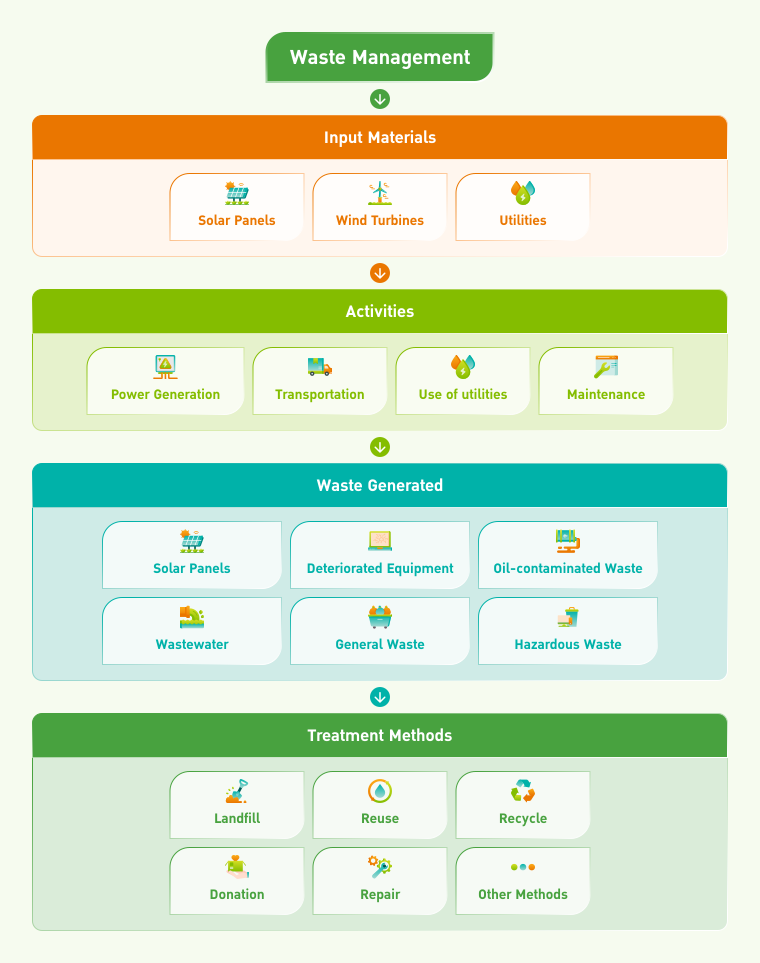
Hazardous waste generated by operations includes deteriorated batteries, used lubricating oil, chemical-contaminated cloths, light bulbs, electrical and electronic equipment, and end-of-life solar panels. The Company controls temporary storage areas, labeling, spill prevention, and traceability throughout the transportation and disposal process.
Waste from Power Generation Processes
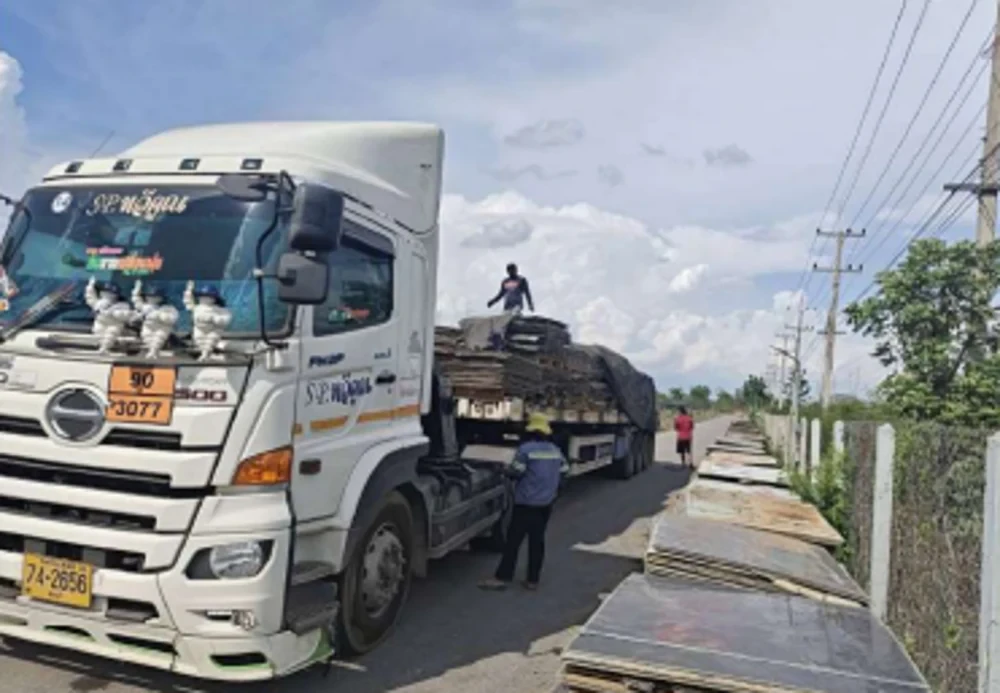
Hazardous waste from solar panels and deteriorated equipment is transported and disposed of by legally authorized hazardous waste management providers through Secure Landfill disposal or other methods prescribed by law. In addition, the Company considers Recycling Methods for damaged or deteriorated solar panels to enhance resource-use efficiency and support the Circular Economy. Older panels that remain operational may be repurposed in other areas, such as through donations to hospitals with suitable space for generating electricity and reducing electricity expenses, or used as spare parts at other power generation projects. This helps maximize the value derived from solar panels.
In addition to waste generated by power generation processes, the Company places importance on managing batteries from Battery Energy Storage Systems (BESS) by collaborating with business partners to study approaches to battery reuse, recycling, and end-of-life management to support the growth of the clean energy business and reduce long-term environmental impacts.

Air Pollution Management
The Company places importance on systematic air pollution management to prevent and mitigate impacts on the environment, health, and the quality of life of stakeholders throughout the value chain. Although the Company’s core business is renewable power generation, which produces relatively low levels of direct air pollutant emissions, it continuously implements measures to control, monitor, and assess air quality impacts throughout project development, construction, operations, and maintenance.
During power plant project development, the Company prepares an Initial Environmental Examination (IEE) and annual performance reports under the supervision of the Occupational Safety, Health and Working Environment Committee. These cover assessments of air quality, noise, natural resource use, and impacts on surrounding communities, together with appropriate prevention and mitigation measures that comply with legal requirements and environmental standards.
The Company operates in accordance with the ISO 14001:2015 Environmental Management System standard by applying environmental risk assessment, legal compliance, and continuous operational improvement approaches to ensure that its business operations meet the expectations of stakeholders, including employees, communities, and society surrounding its projects, while effectively minimizing environmental impacts.
In addition, the Company places importance on controlling and reducing air pollution at projects to be developed or constructed in the future by establishing measures for dust control, machinery and equipment maintenance, combustion control, and air quality monitoring in operational areas. These measures aim to prevent impacts on communities, the environment, and the health of stakeholders surrounding the projects.
In 2025, the Company continuously monitored and inspected air quality in operational areas through an expert external organization in accordance with the Department of Health Notification on Indoor Air Quality Surveillance Values in Public Buildings and Singapore Standard SS 554:2016, Code of Practice for Indoor Air Quality for Air-conditioned Buildings. Indoor air quality was measured at seven locations within the office building, covering common areas and employee work areas, such as meeting rooms, the photocopy room, the kitchen, and employee workspaces, to promote employee well-being and an appropriate working environment.
Overall measurement results showed that most indoor air quality parameters were within the prescribed standards. However, the Total Microbial Count (Aerobic Plate Count) in the pantry on the 12th floor and Formaldehyde levels at certain points in a meeting room on the 12th floor exceeded the prescribed limits. The Company therefore improved the affected areas and established a follow-up monitoring plan to appropriately control and reduce employee health risks.
In addition, the Company measured illuminance using both Area Measurement and Spot Measurement methods. A Lux Meter calibrated in accordance with the standards of the Commission Internationale de Éclairage (CIE) was used to ensure the accuracy and reliability of the measurement results. The assessment referred to the Department of Labour Protection and Welfare Notification on Illumination Standards B.E. 2560 (2017).
The results showed that illuminance levels across the measured areas ranged from 405 to 1,634 lux and met the prescribed standards at all measurement points. No areas were identified as posing health risks or adversely affecting employee work performance.
Air Pollution from Power Generation Processes
The Company’s renewable power generation operations produce low and insignificant levels of air pollutant emissions compared with fossil fuel-based power generation. The Company’s core operations do not generate significant emissions of air pollutants, including Nitrogen Oxides (NOx), Sulfur Oxides (SOx), and Particulate Matter (PM).
Nevertheless, the Company continuously monitors and controls air quality impacts, particularly those associated with construction, transportation, and other supporting activities, to prevent and mitigate impacts on employees, communities, and the surrounding environment. It also strictly complies with applicable environmental requirements, laws, and standards.


Key Stakeholders

Employees
- Promoted employee engagement and awareness of waste management, pollution reduction, and efficient resource use through internal activities and communication.
- Enhanced employees’ environmental knowledge and involvement, including waste sorting, recycling, and reducing resource consumption.
- Measured and monitored indoor air quality in office buildings to promote employee well-being and a healthy working environment.
- Managed occupational health, safety, and the working environment in accordance with international standards.
- Controlled and reduced impacts from air pollution, waste, and resource use arising from operations to prevent and mitigate impacts on the health and quality of life of employees and contractors working on-site.

Communities
- Managed general waste, hazardous waste, and end-of-life equipment efficiently in accordance with applicable laws and standards.
- Controlled and reduced air pollution and continuously monitored environmental impacts arising from project operations.
- Managed wastewater appropriately to minimize impacts on communities and the environment.
- Promoted community engagement through stakeholder consultation, information disclosure, and ongoing community development activities.