
Sustainable Supply Chain Management

Supporting the SDGs

Opportunities and Challenges
The Company is committed to operating in accordance with good corporate governance principles and recognizes the importance of sustainable supply chain management to achieve optimal efficiency while considering economic, social, and environmental impacts throughout the Value Chain. The Company promotes Green Procurement and supports the selection of suppliers that conduct business responsibly and transparently and comply with standards on human rights, occupational health and safety, and environmental management.
The Company faces challenges arising from climate change, increasingly stringent environmental regulations, and stakeholder expectations regarding sustainable practices at every stage of the supply chain. Some suppliers may not yet possess sufficient knowledge, management systems, or comprehensive ESG practices, affecting their ability to effectively assess and manage environmental, social, and governance risks within the supply chain. In addition, fluctuations in raw material, energy, and transportation costs may affect business continuity and the Company’s greenhouse gas emissions reduction targets.
Nevertheless, the Company recognizes opportunities to enhance its supply chain management by systematically integrating ESG principles into its procurement and supplier management processes. It focuses on building supplier capabilities, raising sustainability awareness, establishing supplier assessment criteria covering environmental, social, and business ethics issues, and continuously monitoring and evaluating supplier performance. These efforts help reduce supply chain risks and strengthen long-term competitiveness.
In addition, the Company seeks to promote collaboration with business partners in developing environmentally friendly products and services, increasing the proportion of low-carbon products and services procured, and applying technology and innovation to enhance operational efficiency. These efforts support the Net Zero target, create shared value for stakeholders, and strengthen the Company’s image as a socially and environmentally responsible organization, thereby creating business opportunities, attracting investors, and supporting sustainable growth in the future.
Targets and Performance

Critical Tier 1 Suppliers undergo an ESG Self-Assessment.
Targets
Performance

General Administration employees responsible for procurement attend ESG training and pass the assessment.
Targets
Performance

Critical Tier 1 Suppliers underwent an On-Site Audit.
Performance

Suppliers representing
Performance

new suppliers passed the sustainability screening.
Performance

critical suppliers signed an acknowledgment of compliance with the Business Supplier Code of Conduct.
Performance

Strategy and Management Approach
The Company recognizes the importance of suppliers and the supply chain as key mechanisms affecting business continuity, operational quality, and sustainable shared value creation. It therefore seeks to manage its supply chain efficiently, transparently, and accountably in accordance with good corporate governance principles, while considering environmental, social, and governance (ESG) impacts throughout the value chain.
The Company has established supplier selection and assessment guidelines that consider quality, operational standards, business ethics, environmental management, human rights, occupational health and safety, as well as suppliers’ ability to manage risks and adapt to climate change. ESG issues are also systematically integrated into procurement and supplier management processes.
In addition, the Company has developed the “BCPG Supplier Code of Conduct” as a common framework for the Company and its suppliers. The Code covers business ethics, legal compliance, human rights, labor practices, occupational health and safety, environmental management, and anti-corruption, with the aim of enhancing suppliers’ operating standards throughout the supply chain.
The Company has developed its supplier management process using Supplier Risk Screening, ESG Supplier Self-Assessments, and Supplier On-Site Audits for critical or high-risk suppliers to ensure that their operations align with the Company’s guidelines. During the year, the Company conducted on-site audits of six suppliers.
The Company also places importance on building supplier capabilities and fostering collaboration through Supplier Conferences and knowledge-sharing activities. These initiatives promote sustainable supply chain management, Green Procurement, and the development of environmentally friendly product and service innovations. They also help enhance operational efficiency, reduce climate-related risks, and support the Company’s long-term Net Zero target. Further information on the BCPG Supplier Code of Conduct is available on the Company’s website.
Supplier Classification Criteria
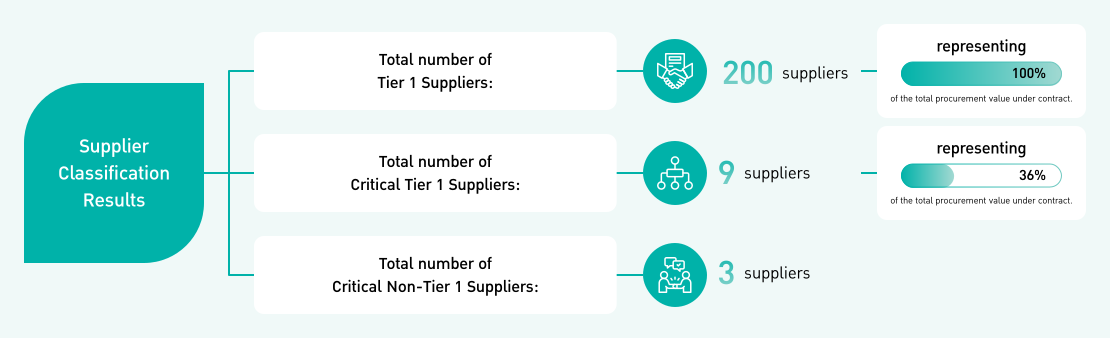
The Company has developed a sustainable supply chain management process by classifying suppliers that manufacture and distribute products or provide services. This classification enables the Company to assess their significance and potential risks to business operations and to establish appropriate supplier management approaches based on the risk level and significance of each supplier group.
The Company has established criteria for classifying critical suppliers into two groups: Critical Tier 1 Suppliers and Critical Non-Tier 1 Suppliers that do not conduct business directly with the Company. This classification supports efficient and transparent supply chain management aligned with sustainable business practices, as detailed below:
Criteria for Identifying Suppliers Critical to the Company

Suppliers with a high procurement value under contract or those supplying critical equipment and components for power generation processes and infrastructure businesses.

Suppliers essential to the Company’s business operations, such as suppliers of raw materials, power generation equipment, engineering systems, and maintenance services.

Suppliers with limited alternatives or whose products or services cannot be replaced within a short period.
Supplier Management Approach
The Company manages its suppliers and supply chain through a system that enables data integration, performance monitoring, and continuous communication with suppliers. This enhances efficiency, transparency, and responsible business conduct throughout the supply chain. The Company has established its operating approach in alignment with the “BCPG Supplier Code of Conduct,” which covers environmental and social issues, human rights, occupational health and safety, business ethics, and anti-corruption. Suppliers are expected to strictly observe and comply with the Code.
Through systematic supplier management, the Company aims to effectively promote ethical conduct, equality, transparency, and ESG risk management while supporting suppliers in building their capabilities and growing sustainably alongside the Company. The General Administration Department, which is responsible for procurement, oversees the formulation of supplier development plans and approaches. Relevant executives establish the direction, processes, and operating guidelines to ensure that sustainable supply chain management is clearly defined, put into practice, and aligned with the Company’s sustainability goals.
Diagram of the Company’s Supplier Management Approach
Supplier Risk Management
- Supply chain risk assessment
- Supply chain value analysis
Supplier Registration
- Assessment of Supplier Qualifications
- Registration on the Approved Vendor List (AVL)
Annual Supplier Performance Evaluation
- Supplier Self-Assessment
- Supplier Audits Conducted with Relevant Departments
The Company undertakes Supplier Risk Management covering risk assessment, business value analysis, and environmental, social, and governance (ESG) factors that may affect the Company and its stakeholders. The process also includes the classification of critical suppliers to establish appropriate management and monitoring approaches based on each supplier’s risk level.
In addition, the Company maintains an Approved Vendor List (AVL) by assessing the qualifications and suitability of suppliers seeking to conduct business with the Company. The assessment criteria cover technical capabilities, product and service quality, financial standing, legal compliance, environmental standards, occupational health and safety, and human and labor rights principles. This process ensures that suppliers possess the necessary capabilities and can operate in accordance with the Company’s standards.
Once approved and registered, suppliers are required to undergo a Yearly Performance Evaluation using the Vendor/Contractor Evaluation Form. Depending on the risk level and conditions specified by the Company, the evaluation covers an ESG Supplier Self-Assessment and an On-Site Audit to continuously monitor and assess supplier performance.
If a supplier fails to comply with the required standards or receives an assessment result below the specified threshold, the Company may require a Corrective Action Plan (CAP) and, as appropriate, consider temporarily suspending procurement from the supplier or permanently removing the supplier from the Company’s Approved Vendor List.
The Company reviews its supplier management approach and processes annually to ensure that its operations align with the BCPG Supplier Code of Conduct, effectively manage and mitigate ESG risks, and support the long-term development of a resilient, transparent, and sustainable supply chain.
ESG Supplier Risk Screening
The Company has established an approach for identifying and assessing supplier risks covering environmental, social, and governance issues. The assessment forms part of its supply chain risk management and helps enhance suppliers’ operating standards in alignment with the Company’s sustainable business practices.
The Company conducts ESG Supplier Risk Screening through the identification, analysis, and prioritization of risks based on their Likelihood and Impact on business operations, supply chain continuity, and the Company’s stakeholders. The assessment draws on information from Supplier Self-Assessments, On-Site Audit results, and suppliers’ historical performance data.

Product and Service Risk

Business Continuity Risk

Environmental Risk

Social and Human Rights Risk

Governance and Ethics Risk
Supplier Risk Assessment Criteria
Risk Matrix
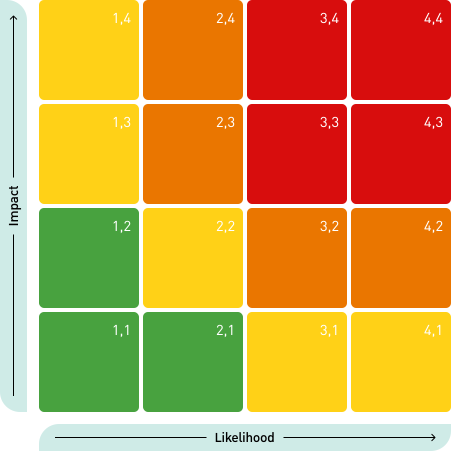
| Risk level* | Risk Evaluation |
|---|---|
|
Scores 9 - 16
|
Very High |
|
Scores 5 - 8
|
High |
|
Scores 3 - 4
|
Medium |
|
Scores 1 - 2
|
Low |
Remark: Risk level = Likelihood of occurrence × Severity of impact
Likehood
| 1 - High Unlikely | 2- Unlikely | 3 - Possible | 4 - Likely |
|---|---|---|---|
| Possibility of existing risks is ≤ 20% | Possibility of existing risks is > 20-50% | Possibility of existing risks is > 50-80% | Possibility of existing risks is > 80% |
| Unlikely to happen in the current year | Possible to happen under specific circumstances | Possible to happen in the current year | Most likely to happen in the current year |
| Never happen | Rarely happen in the past year | Sometimes happen in the past years | Regularly happen in the past years |
| Impact | Finance | Operation and Workforce | Reputation | Compliance and Environment |
|---|---|---|---|---|
|
4
Severe |
Affect EBITDA, Revenue or PAT > 10% |
|
|
|
|
3
High |
Affect EBITDA, Revenue or PAT > 5%-10% |
|
|
|
|
2
Medium |
Affect EBITDA, Revenue or PAT > 1%-5% |
|
|
|
|
1
Low |
Affect EBITDA, Revenue or PAT ≤1% |
|
|
|
Supplier Risk Screening Results

New Suppliers

Critical Tier 1 Suppliers were identified as
The Company uses the risk assessment results to establish supplier management approaches, monitor supplier performance, and determine appropriate risk mitigation measures. These include monitoring Corrective Action Plans (CAPs), conducting additional audits, and building supplier capabilities to strengthen supply chain resilience and reduce potential long-term ESG impacts on the Company and its stakeholders.
Supplier Assessment
The Company annually monitors and assesses critical suppliers’ compliance with the BCPG Supplier Code of Conduct, covering environmental, social, and governance issues. This process encourages suppliers to conduct business responsibly and transparently in alignment with the Company’s sustainable business practices.
The Company assesses its Critical Tier 1 Suppliers through On-Site Audits, Supplier Self-Assessments, and ESG performance monitoring to evaluate their business standing, operational capabilities, and compliance with the Company’s sustainability criteria.
Criteria for Selecting Suppliers for Assessment


The annual supplier assessment comprises the following six criteria:
| Supplier Assessment Criteria | Supplier Assessment Details |
|---|---|
| 1. Management Responsibilities and Code of Conduct |
|
| 2. Product and Service Quality Management |
|
| 3. Production Process Control (Applicable Only to the Procurement of Goods) |
|
| 4. Supply Chain Management |
|
| 5. Product and Service Delivery and Customer Responsibility |
|
| 6. Safety and Environment |
|
Supplier Assessment Results
Supplier Assessment Results

Critical Tier 1 Suppliers underwent On-Site Audits.

identified through the assessment as having significant negative environmental, social, or governance impacts.

significant negative impacts were undergoing corrective action.

their contracts with the Company terminated due to significant negative impacts.
Supplier Capability Development Results

received support on corrective action approaches and ESG capability development.

Approaches to Supplier Corrective Action and Development
The Company has established corrective action and development approaches for suppliers assessed as being exposed to environmental, social, and governance risks. Examples of these approaches are as follows:
| Product and Service Quality Management | Environment and Safety |
|---|---|
|
|

Employee Capability Development
In addition to systematic supplier management, the Company places importance on developing the capabilities of personnel responsible for supply chain management and procurement, particularly in sustainability-related areas. This aims to enhance their knowledge, skills, and capabilities in supply chain management in alignment with the Company’s sustainable business practices.
The Company aims to enhance the environmental, social, and governance (ESG) knowledge and understanding of General Administration personnel and employees responsible for procurement. It also equips them to apply sustainability concepts when making decisions on sourcing, procurement, and supplier management. This supports business engagement with suppliers that operate transparently and ethically and appropriately address human rights, social responsibility, and environmental management.
In addition, the Company promotes employee capability development to enable personnel to adapt to trends and changes in the energy sector, as well as evolving stakeholder expectations, laws, and relevant sustainability standards.
In 2025, the Company developed the capabilities of General Administration personnel and employees responsible for procurement through training and activities covering ESG and sustainable supply chain management. These initiatives aimed to raise sustainability awareness and promote the effective application of acquired knowledge in procurement processes.


Key Stakeholders

Employees
- Promoted employee knowledge and capabilities in sustainable procurement and ESG-based supply chain management through training and related activities.
- Developed a transparent supply chain management system aligned with good governance principles, including the management of ESG risks throughout the supply chain.
- Provided a good and safe working environment as a foundation, together with healthcare support to enhance employee satisfaction.
- Emphasized greenhouse gas emissions reduction and efficient resource use, encouraging employee participation in sustainability initiatives such as reducing energy consumption and using recycled materials.

Suppliers
- Conducted annual Supplier Self-Assessments and On-Site Audits to enhance ESG performance standards and reduce supply chain risks.
- Organized meetings, seminars, and Supplier Conference activities to strengthen suppliers’ knowledge, understanding, and capabilities in sustainable business practices.
- Encouraged suppliers to comply with human rights, occupational health and safety, and business ethics principles throughout the supply chain.
- Collaborated with suppliers to develop environmentally friendly innovations, products, and services to enhance operational efficiency and create sustainable shared value.