

Materiality Assessment and the Definition of Impact on Stakeholders
The Company analyzed and prioritized material ESG topics by considering their impacts on, and significance to, the Company and its internal and external stakeholders. In accordance with the Double Materiality approach, the analysis considered both financial and non-financial impacts on the Company and external stakeholders through an assessment of risks, opportunities, and positive and negative impacts across the environmental, social, economic, and governance dimensions. The assessment was based on internationally recognized sustainability reporting criteria, namely the GRI Standards 2021, and incorporated input from experts and all stakeholder groups to ensure comprehensive coverage of both business impacts and impacts on society and the environment. The Company has also incorporated the assessment of material ESG topics into its Enterprise Risk Management process and places importance on identifying risks and establishing appropriate risk response or management plans to further develop sustainable management practices.
Process
Review and Identification of Material ESG Topics
Identification of Impacts Arising from Each Material ESG Topic
Assessment of Material ESG Topics
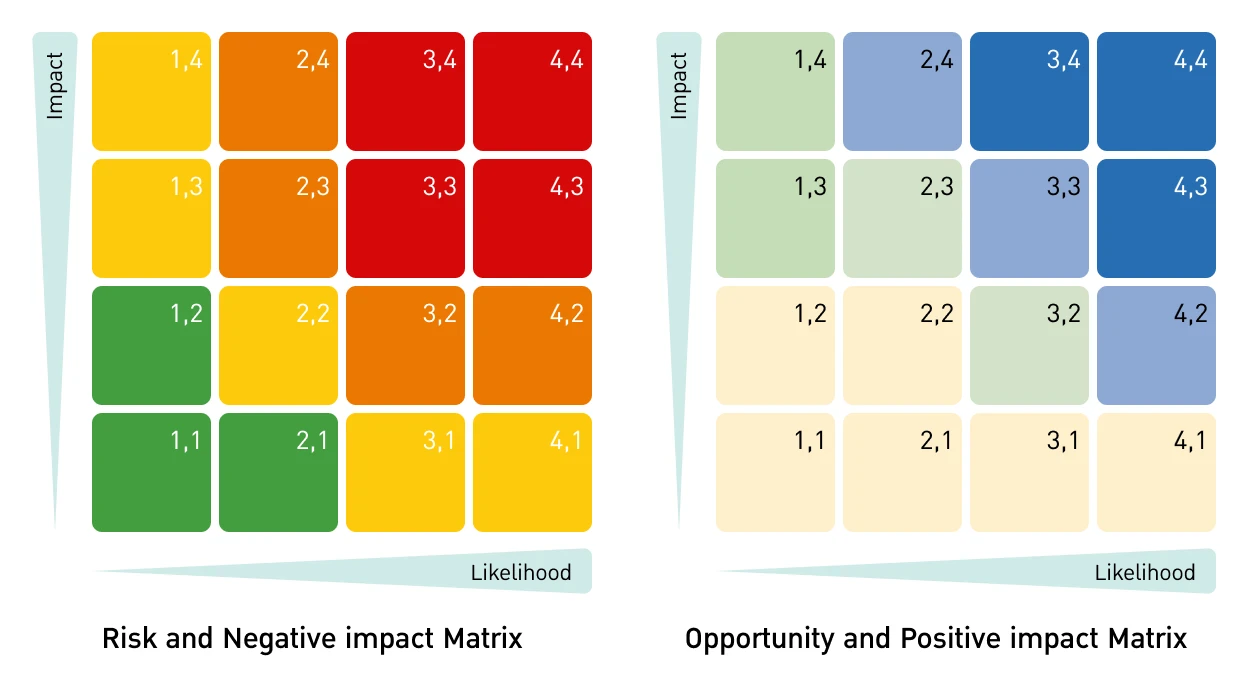
The Company assessed the impacts on its business and on external society based on the various contexts collected through stakeholder interviews and surveys. The assessment considered both sustainability impact dimension (Impact Materiality) and the financial impact dimension (Financial Materiality), as detailed below:
- Impact Materiality Assessment: Positive and negative impacts were assessed by considering their scale (Scale), including the severity of potential impacts on the environment and society; the extent of the impacts (Scope); the ability to remedy negative impacts (Remediability); and the likelihood of such impacts occurring (Likelihood)
- Financial Materiality Assessment: Opportunities and risks were assessed by considering their impacts on financial matters (Financial), reputation (Reputation), internal operations (Internal Operation), and their likelihood of occurrence (Likelihood)
Prioritization and Validation of Material ESG Topics
Materiality Assessment Results
Based on its assessment of material ESG topics, which considered impacts on the Company across the environmental, social, economic, and good corporate governance dimensions, together with the expectations of, and impacts on, external stakeholders, the Company reviewed and prioritized a total of 15 topics in 2025 and found that:
| 5 topics were classified as Strategic ESG Topics; | 6 topics were classified as Fundamental ESG Topics; and | 4 topics were classified as Other ESG Topics |
|---|---|---|
| Topics that are significant to the Company’s short- and long-term strategies and serve as key drivers of business growth, value creation, and positive impacts on society and the environment, or give rise to significant opportunities and risks for the Company. These topics reflect the matters prioritized by the Company’s internal and external stakeholders. | Topics related to the Company’s operations that are essential to responsible corporate governance; compliance with applicable laws, regulations, standards, and practices; and the maintenance of the Company’s License to Operate. These topics must be managed through strictly established policies, operating procedures, and internal control systems to mitigate potential risks to the Company or negative impacts on society and the environment outside the organization. | Other topics that support the achievement of the Company’s strategic objectives by improving operational efficiency and strengthening the effectiveness of risk management across its projects and operations. |

- Environment
- Social
- Economic and Governance
Circle size reflects the level of impact and financial value.
- High
- Medium
- Low
List of Material Topics
| Environment | Social | Economic and Governance |
|---|---|---|
| Strategic ESG Topics | ||
|
|
|
| Fundamental ESG Topics | ||
|
|
|
| Other ESG Topics | ||
|
|
|
Impacts of Strategic ESG Topics on the Company and Stakeholders

Strategic ESG Topics
Transition-Aligned Investment


- GRI 201: Economic Performance 2016
- GRI 302: Energy 2016
- GRI 305: Emission 2016
Key Stakeholders
Impacts on the Company
Opportunities
Risks
Impacts on Stakeholders
Positive Impacts
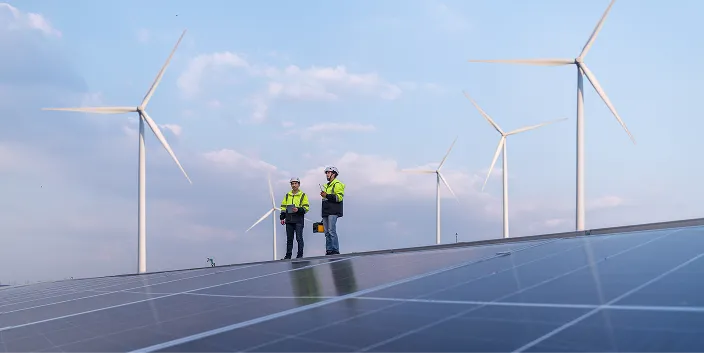
- The development of clean energy and greenhouse gas emission reduction technologies enables stakeholders, particularly communities, customers, and government agencies, to access stable, safe, and environmentally friendly energy sources. It also reduces reliance on fossil fuels and supports the achievement of the country’s long-term greenhouse gas emission reduction targets.
- The generation and distribution of affordable solar energy enable people and communities to gain wider access to clean energy, strengthen energy security, reduce long-term energy costs, and support the transition to a low-carbon economy.
Negative Impacts
Management Approach for Material ESG Topics
- Energy management and approaches to climate change response and adaptation
Strategic ESG Topics
Biodiversity and Ecosystems

- GRI 101: Biodiversity 2024

Key Stakeholders
Impacts on the Company
Opportunities
Risks
Impacts on Stakeholders
Positive Impacts
Negative Impacts
Management Approach for Material ESG Topics
- Biodiversity management

Strategic ESG Topics
Risk and Business Continuity Management

Key Stakeholders
Impacts on the Company
Opportunities
- Systematic Risk and Business Continuity Management that comprehensively covers risks such as natural disasters, public health emergencies, geopolitical uncertainty, and supply chain volatility enhances the Company’s preparedness to respond promptly to potential crises. It reduces operational impacts, maintains continuity in production and service delivery, increases stakeholder confidence, particularly among investors, suppliers, and customers, and enhances the Company’s competitiveness.
- Comprehensive employee health and safety management, particularly in relation to epidemics and other emergencies, can build confidence both within the organization and among suppliers and investors, enabling the business to continue operating even during a crisis.
Risks
- Operating in multiple countries exposes the Company to risks arising from geopolitical uncertainty (Geopolitics), supply chain disruption, and exchange rate volatility, which may affect the Company’s investments and returns on investment.
- Climate change is increasing the severity and frequency of natural disasters, such as floods, droughts, and heatwaves. These events may affect power plant operations, resource availability, and power generation efficiency, thereby affecting business continuity. They may also cause damage to assets, reduce revenue, and increase maintenance and adaptation costs.
Impacts on Stakeholders
Positive Impacts
Negative Impacts
- Disruptions to operations or interruptions in power generation may affect the energy security of customers and communities and cause damage to economic activities in the area.
- Emergencies or serious accidents that are not appropriately managed may affect the lives and property of employees, suppliers, and surrounding communities.
Management Approach for Material ESG Topics
- Risk and Business Continuity Management
Strategic ESG Topics
Innovation and Digitalization


Key Stakeholders
Impacts on the Company
Opportunities
Risks
Impacts on Stakeholders
Positive Impacts
- Collaboration with industry partners, educational institutions, and government agencies helps strengthen the innovation ecosystem, promote knowledge sharing, and accelerate the development of technologies that address the needs of stakeholders across all sectors.
- Innovation and Digitalization enhance the efficiency and resilience of energy systems, enabling customers and society to access more stable, higher-quality, and more sustainable energy while supporting the long-term transition to a low-carbon energy system.
Negative Impacts
Management Approach for Material ESG Topics
- Enhancement of the renewable energy business and creation of market expansion opportunities.
Strategic ESG Topics
Business Adaptability

Key Stakeholders
Impacts on the Company
Opportunities
- Business adaptability enables the Company to adjust its investment portfolio in response to changes in the energy industry and global trends, such as the transition to clean energy, the growth of digital infrastructure, and increasing electricity demand from emerging business sectors, including data centers. These developments create opportunities to establish new revenue streams and achieve sustainable long-term growth.
- Investment diversification enables the Company to access new business opportunities, such as energy storage, smart grids, and power generation for data centers. It reduces the risks associated with dependence on any single market or technology, increases flexibility in portfolio management, and enhances the Company’s competitiveness.
- The Company’s ability to monitor, adapt to, and comply promptly with new laws or standards helps reduce legal risks, creates opportunities to access new markets or projects, and enhances credibility among investors, suppliers, and regulatory authorities.
Risks
- If the Company is unable to adapt promptly to changes in external factors, such as regulations, energy policies, technologies, and market conditions in each country, its project development, returns on investment, and stakeholder confidence may be affected.
- Differences in and the complexity of regulations across the countries in which the Company invests may create uncertainty regarding revenue and costs. Examples include changes in carbon tax policies in the United States, which may affect project expenses, and uncertainty surrounding energy policies in Thailand, such as Power Purchase Agreement (PPA) conditions or the fuel adjustment charge (Ft), which may affect long-term revenue.
- Increasing competition in renewable energy markets and the risk of oversupply may place pressure on investment returns and reduce the Company’s competitiveness.
Impacts on Stakeholders
Positive Impacts
Negative Impacts
Management Approach for Material ESG Topics
- Enhancement of the renewable energy business and creation of market expansion opportunities
Impacts of Fundamental ESG Topics on the Company and Stakeholders
Fundamental ESG Topics
Air Quality and Pollution Management
- GRI 306: Waste 2020

Key Stakeholders
Impacts on the Company
Opportunities
Risks
Impacts on Stakeholders
Positive Impacts
Negative Impacts
Management Approach for Material ESG Topics
- Air pollution management

Fundamental ESG Topics
Local Communities and Human Rights



- GRI 413: Local Communities 2016

Key Stakeholders
Impacts on the Company
Opportunities
Risks
Impacts on Stakeholders
Positive Impacts
Negative Impacts
Management Approach for Material ESG Topics
- Community and social development engagement
Fundamental ESG Topics
Human Capital Recruitment, Development and Retention
- GRI 401: Employment 2016
- GRI 402: Labor/Management Relations 2016
- GRI 404: Training and Education 2016
- GRI 405: Diversity and Equal Opportunity
- GRI 406: Non-discrimination 2016
- GRI 407: Freedom of Association and Collective Bargaining 2016
- GRI 408: Child Labor 2016
- GRI 409: Forced Compulsory Labor 2016

Key Stakeholders
Impacts on the Company
Opportunities
Risks
Impacts on Stakeholders
Positive Impacts
Negative Impacts
Management Approach for Material ESG Topics
- Internal personnel development and employee retention
Fundamental ESG Topics
Occupational Health and Safety
- GRI 403: Occupational Health and Safety 2018

Key Stakeholders
Impacts on the Company
Opportunities
Risks
Impacts on Stakeholders
Positive Impacts
Negative Impacts
Management Approach for Material ESG Topics
- Safety, occupational health, and working environment management
Fundamental ESG Topics
Corporate Governance, Conduct and Ethics
- GRI 2: General Disclosure 2021
- GRI 205: Anti-corruption 2016
- GRI 206: Anti-competitive Behavior 2016

Key Stakeholders
Impacts on the Company
Opportunities
Risks
- If the Company’s ethics and corporate governance management is not sufficiently robust, resulting in corruption or non-compliance with the Code of Conduct, it may severely affect the Company’s reputation and value and undermine the confidence of investors and stakeholders.
- Non-transparent or insufficient communication or disclosure may lead to negative interpretations by the public and the media, affecting the Company’s credibility, stakeholder relationships, and long-term ability to conduct business.
Impacts on Stakeholders
Positive Impacts
Negative Impacts
Management Approach for Material ESG Topics
- Good corporate governance and the Code of Conduct
Fundamental ESG Topics
Cybersecurity Maintenance

Key Stakeholders
Impacts on the Company
Opportunities
Risks
Impacts on Stakeholders
Positive Impacts
- Giving importance to cybersecurity standards helps protect the information of employees, customers, suppliers, and other relevant stakeholders.
- Strengthening employees’ cybersecurity skills enables them to apply their knowledge both at work and in their daily lives.
Negative Impacts
Management Approach for Material ESG Topics
- Good corporate governance
Impacts of Other ESG Topics on the Company and Stakeholders
Other ESG Topics
Water Management
- GRI 303: Water and Effluent 2018

Key Stakeholders
Impacts on the Company
Opportunities
Risks
Impacts on Stakeholders
Positive Impacts
Negative Impacts
Management Approach for Material ESG Topics
- Water resource management
Other ESG Topics
Waste Management
- GRI 306: Waste 2020

Key Stakeholders
Impacts on the Company
Opportunities
Risks
- Waste management that does not meet applicable standards or lacks an appropriate waste management system may create environmental, regulatory, and corporate image risks, affect stakeholder confidence, and impair the Company’s ability to develop new projects.
- Increasingly stringent waste management regulations, including requirements for managing end-of-life solar panels, may increase operating and investment costs and add complexity to long-term project management.
Impacts on Stakeholders
Positive Impacts
Negative Impacts
Management Approach for Material ESG Topics
- Waste and pollution management
Other ESG Topics
Product & Service Quality
Key Stakeholders
Impacts on the Company
Opportunities
Risks
Impacts on Stakeholders
Positive Impacts
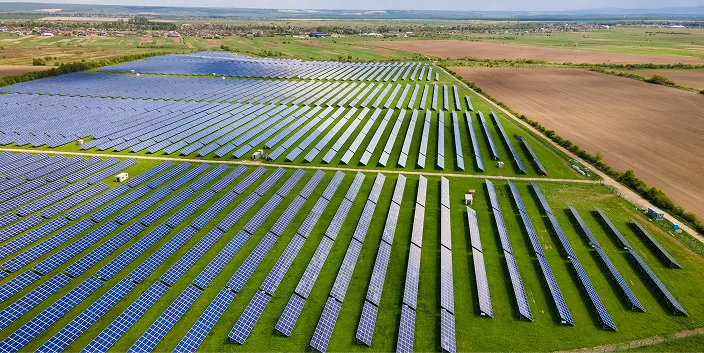
- Delivering stable, safe, and high-quality energy enables customers and businesses to operate continuously, reduces the risk of system disruptions, and improves business efficiency.
- Effective management systems and stable power plant operations help raise service standards and support the overall security of the energy system.
Negative Impacts
- If the quality or stability of electricity supply does not meet applicable standards, customers’ operations may be affected, particularly in industrial sectors or businesses that depend on a continuous energy supply. This may result in business losses, increased costs, and lost economic opportunities.
- Lax safety management of products and service systems may cause harm to customers’ health or property and damage their systems or data.
Management Approach for Material ESG Topics
- Risk and Business Continuity Management
- Safety, occupational health, and working environment management
Other ESG Topics
Sustainable Supply Chain
- GRI 204: Procurement Practices 2016
- GRI 414: Supplier Social Assessment 2016
- GRI 308: Supplier Environmental Assessment 2016

Key Stakeholders
Impacts on the Company
Opportunities
- Sustainable supply chain management and collaboration with strategic suppliers help strengthen supply security, reduce risks arising from fluctuations in costs and delivery, and support the continuity of the Company’s projects and operations.
- Joint innovation development with suppliers and the enhancement of ESG standards throughout the supply chain help improve efficiency, reduce environmental impacts, and respond to the needs of customers and investors. This strengthens the Company’s competitiveness and its opportunities to access new projects.
Risks
- Supply chain volatility, such as equipment shortages and delivery delays, may increase project costs, delay construction, and affect the Company’s operating plans and returns or revenue.
- Suppliers’ neglect of ESG matters may affect the Company’s reputation and undermine stakeholder confidence.
Impacts on Stakeholders
Positive Impacts
Negative Impacts
- Ineffective supply chain management may delay the delivery of goods and services and affect the Company’s revenue and operating performance, potentially affecting stakeholders such as investors and business partners.
- Stringent ESG standards within the supply chain may increase suppliers’ costs and impose operational constraints, particularly on small businesses. This may affect their competitiveness or ability to continue serving as the Company’s suppliers.
Management Approach for Material ESG Topics
- Sustainable supply chain management
Examples of Material Topic Management[
| Material Topic | Risk Factors for the Company | Targets[P | The Company’s Indicators |
|---|---|---|---|
 Transition-Aligned Investment Transition-Aligned Investment |
Strategic risk management factor: Readiness to undertake climate action toward achieving net-zero greenhouse gas emissions. |
|
|
 Occupational Health and Safety Occupational Health and Safety |
Operational risk factor: Operations that pose safety risks to employees, suppliers, and contractors. |
|
|
 Local Communities and Human Rights Local Communities and Human Rights |
Corporate reputation risk factor: Managing expectations, reducing risks to communities arising from activities, and building strong networks. |
|
|
Note: The performance indicators for senior executives comprise 40–60% Corporate KPIs, while the remaining 60–40% are Functional KPIs relating to activities carried out by the respective functional units.
