

Projects and Activities
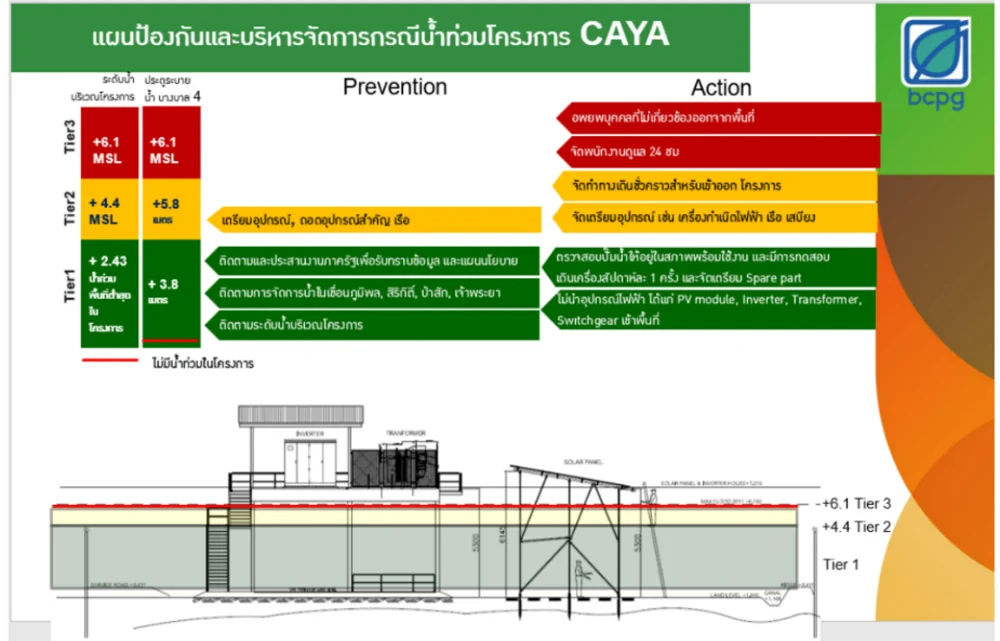
Flood Emergency Impact Prevention Plan
The Company develops a Business Continuity Plan (BCP) to prevent and manage potential business impacts arising from flood emergencies and reduce risks to its projects. Measures include constructing embankments or flood barriers around wastewater treatment ponds to prevent flooding and wastewater leakage.
In addition, the Company continuously inspects and maintains drainage systems to prevent blockages and reduce the risk of chemicals or hazardous waste contaminating the environment. Chemical products, raw materials, and waste are also stored in areas protected from flooding to prevent environmental impacts during emergencies. The Company also inspects and improves operational areas with a history of flooding and surveys potential routes through which water may enter project sites, enabling flood protection systems to be designed and upgraded effectively according to the specific characteristics of each project.

Note: Tier levels are determined based on each project’s elevation above sea level and the geographical characteristics of its location.
Examples of Flood Prevention and Management Plans for the Company’s Projects
| Water Level (meters) | Floodgate Level (meters) | Prevention Measures | Actions | |
|---|---|---|---|---|
|
Tier 3
|
6.1 | 6.1 |
|
|
|
Tier 2
|
4.4 | 5.8 |
|
|
|
Tier 1
|
2.4 | 3.8 |
|
|
Benefits of the Program
- Developed flood prevention and response plans for each project to enhance Business Continuity preparedness.
- Reduced the risk of wastewater, chemical, and hazardous waste leakage into the environment during emergencies.
- Enhanced flood risk management by establishing preventive measures corresponding to each level of severity.
